What VR Gets Wrong About Gender and Why It Matters for Platform Design
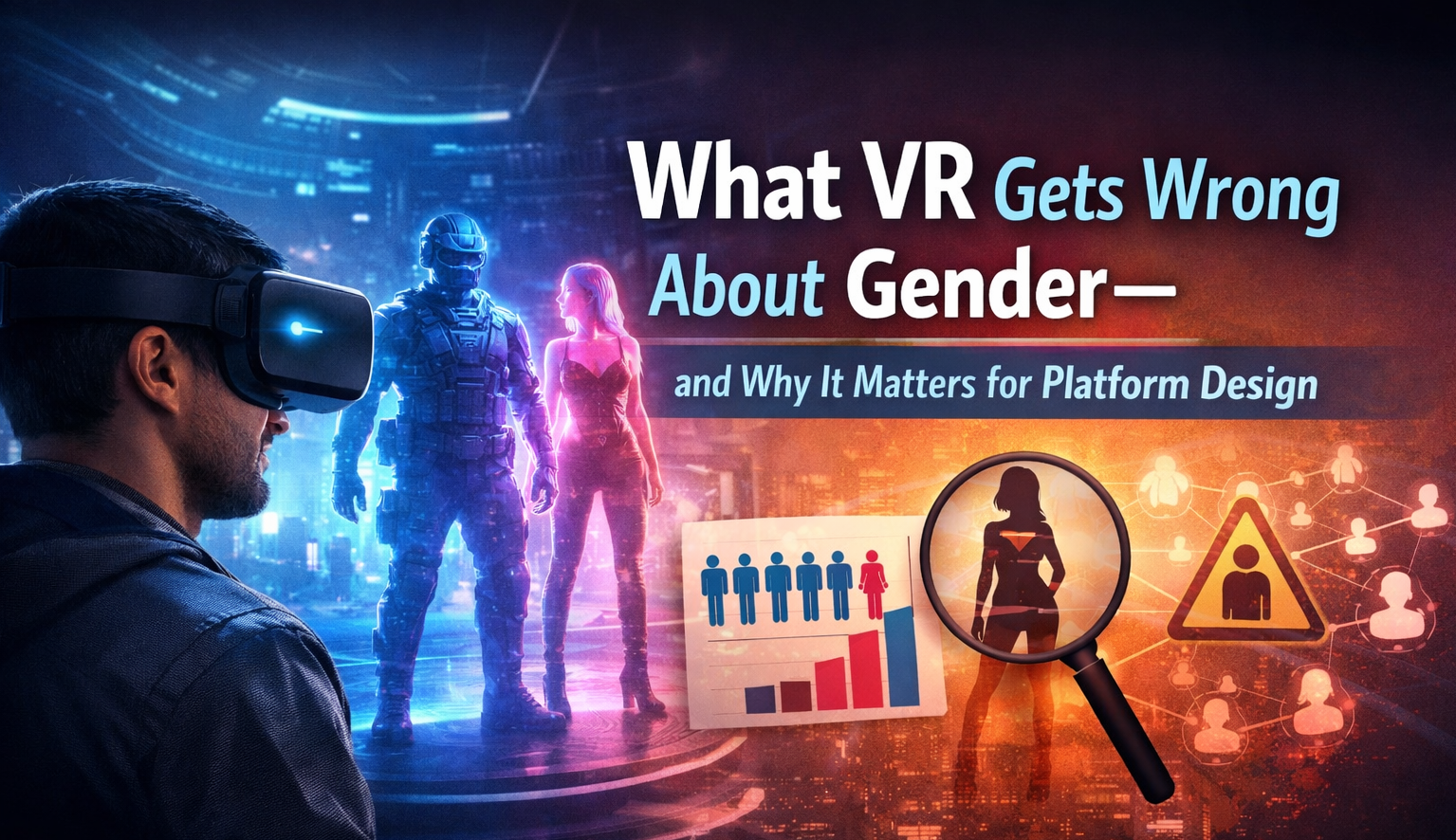
What VR Gets Wrong About Gender and Why It Matters for Platform Design
June 10, 2026
Immersive technologies change how people experience media. In VR, users are embodied, spatially present, and socially engaged in ways that go beyond traditional screen-based platforms.
That raises an important question for organizations building or governing immersive environments:
What kinds of people are being represented, and relatedly, what kinds are missing?
To answer this, my colleagues and I conducted a systematic content analysis of popular VR games across major platforms, examining both gender representation and sexualization patterns.
The most striking finding was not sexualization, but absence.
Male characters appeared roughly four times more often than female characters overall. This imbalance was especially pronounced in competitive VR games, where interaction intensity and social presence are highest.
Sexualization did occur - about 30% of female characters showed at least one sexualized feature - but it did not vary meaningfully by genre, ESRB rating, or game type. This suggests that common industry levers (ratings, content categories) are blunt tools for addressing representational risk.
More revealing was where sexualization clustered. Female characters were more likely to be sexualized when they were portrayed as physically capable, violent, or as victims, patterns that mirror long-standing gender tropes but may be amplified by immersion and embodiment.
For organizations, the implications are practical:
- Representation gaps can persist even when overtly sexualized content declines
- Design decisions in competitive or high-engagement environments carry disproportionate social impact
- Surface-level compliance does not substitute for structural audits
This is the kind of work I do when advising teams on content evaluation, platform governance, and evidence-based design decisions under uncertainty.
Check my related publication here.